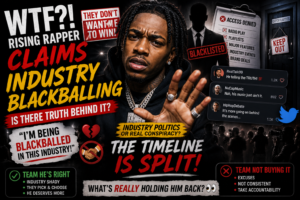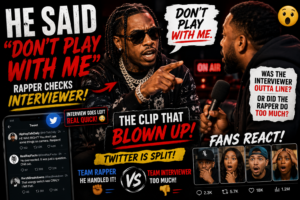


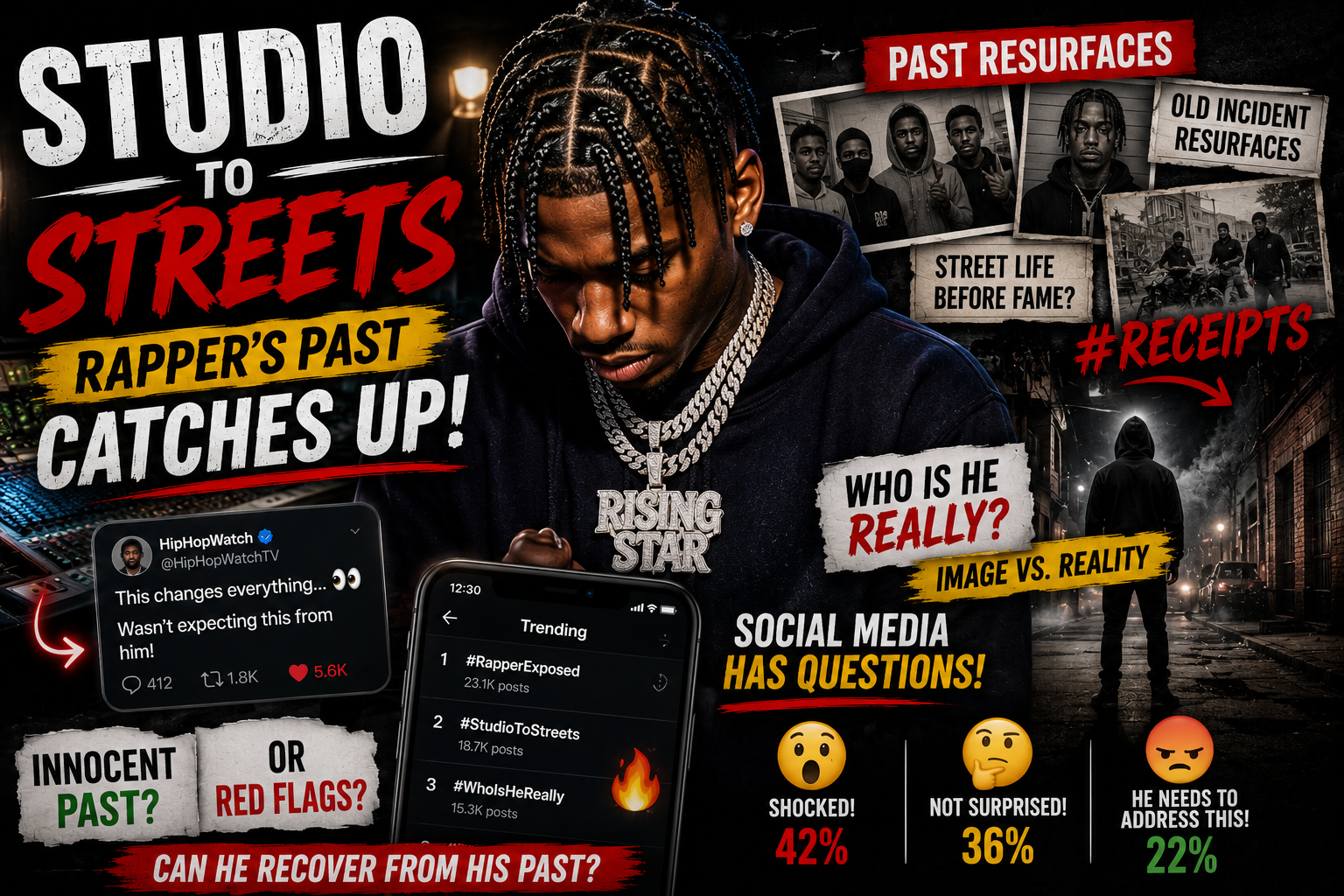
A rising rapper is trending online this week, but not for a new release or major collaboration. Instead, attention has shifted to resurfaced clips and past activity that have sparked widespread debate across social media. What began as momentum in his music career has quickly turned into a conversation about authenticity, personal history, and how much the past should matter in the present.
The artist had been building steady buzz in recent weeks. With new music circulating, a growing fanbase, and increased visibility across platforms, everything appeared to be moving in the right direction. Supporters were beginning to take notice, and industry attention seemed to be following. However, that upward trajectory took an unexpected turn when older content linked to the rapper began circulating online.
Clips, posts, and discussions tied to his past started resurfacing, raising questions among fans and observers. While none of the material was entirely new, the renewed attention placed it in a different context, one that directly contrasted with the image he has been presenting through his music and public persona.
As these clips spread, social media quickly shifted into analysis mode. Users began sharing, reposting, and dissecting the content, attempting to piece together a clearer picture of who the rapper is beyond the music. What might have once gone unnoticed or been overlooked suddenly became central to the conversation.
Reactions from fans have been mixed. Some expressed genuine surprise, saying they were unaware of this side of the artist. Others claimed the information had always been available, suggesting that newer audiences were only now catching up. This divide has created two very different narratives: one focused on discovery and shock, and another rooted in “this was already known.”
At the center of the discussion is a familiar question in today’s music industry, authenticity. Listeners are asking whether the rapper’s current image aligns with his past, or if there is a disconnect between who he was and who he presents himself to be now. In an era where artists carefully craft their brands, even small inconsistencies can become major talking points.
The resurfaced material includes references to past behavior, older statements, and situations that some feel do not match the direction of his current career. While details remain debated and often lack full context, the presence of visual evidence, videos, photos, and screenshots, has made the conversation more intense. Once audiences can see something for themselves, speculation tends to carry more weight, whether accurate or not.
As the discussion grows, the impact on the rapper’s momentum is becoming noticeable. Some fans are questioning their support, while others are choosing to separate the music from the individual. This split reflects a broader trend in entertainment, where audiences constantly negotiate the line between art and artist.
Another layer to the situation is the role of social media in shaping perception. Much of the current narrative is being driven not by official statements or verified reports, but by short clips, reposted content, and user commentary. This raises an important point: how much of what people believe is based on full information, and how much is influenced by what goes viral?
In many cases, viral content lacks context. A clip might show a moment without explaining what led up to it or what followed. Posts can be interpreted in multiple ways depending on who is sharing them and why. As a result, the story that spreads online is not always the complete story, it is often the most engaging version.
Despite that, the speed at which information spreads makes it difficult to slow down the conversation. Within hours, what started as a few resurfaced posts turned into a widespread debate involving thousands of users. Memes, reaction videos, and commentary began circulating alongside more serious discussions about character, growth, and accountability.
The idea of “cancel culture” has also entered the conversation. Some users believe the rapper should face consequences for his past, while others argue that people should be allowed to grow and move forward. This tension is not new, but situations like this continue to highlight how divided opinions can be.
Supporters of the artist emphasize that past actions do not always define a person’s future. They point out that many individuals evolve over time and that growth should be recognized rather than ignored. Critics, on the other hand, argue that past behavior provides insight into character and should not be dismissed so easily.
This debate reflects a larger cultural question: should audiences judge public figures based on who they were, or who they are now? There is no simple answer, and that complexity is part of why conversations like this gain so much attention.
Another factor to consider is the pressure that comes with visibility. As artists gain popularity, their lives become more accessible to the public. Old content that once existed in smaller circles can quickly reach a global audience. In this environment, nothing truly disappears, it simply waits to be rediscovered.
Industry observers are also paying attention. Situations like this can influence partnerships, collaborations, and overall reputation. While fans drive much of the online conversation, decision-makers behind the scenes often take these discussions into account when considering future opportunities.
At the same time, there is an argument to be made about unintended benefits. Increased attention, whether positive or negative, can lead to higher visibility. People who were previously unfamiliar with the rapper may now be exploring his music out of curiosity. In some cases, controversy can amplify reach, even if it complicates public perception.
Still, the long-term impact remains uncertain. Viral moments can shift public opinion quickly, but they do not always define an artist’s career. What matters next is how the situation is handled moving forward.
One of the biggest questions right now is whether the rapper will respond. As of now, there has been no clear statement addressing the resurfaced content. In the absence of a response, speculation continues to grow. Silence can be interpreted in multiple ways, some see it as strategic, while others view it as avoidance.
If the artist chooses to speak, audiences will likely expect clarity. A response could take many forms, from a direct explanation to a broader statement about growth and change. How that message is delivered may play a significant role in shaping what happens next.
For now, the conversation continues to evolve. New posts, opinions, and interpretations are still being shared, keeping the topic active across platforms. What started as a moment has turned into an ongoing discussion about identity, perception, and the power of the internet.
Situations like this highlight how quickly narratives can shift. One moment, an artist is gaining momentum through music; the next, attention is focused on something entirely different. In a digital landscape where everything is documented and easily accessible, managing both the present and the past becomes part of the reality of being in the spotlight.
At a broader level, this moment is not just about one rapper. It reflects how audiences engage with public figures today. People are not only consuming music, they are analyzing personalities, histories, and authenticity. The line between entertainment and personal scrutiny continues to blur.
Ultimately, the outcome of this situation will depend on multiple factors: how the artist responds, how fans choose to interpret the information, and whether the conversation eventually shifts back to the music. For now, though, the focus remains on the questions being asked.
💬 WHAT DO YOU THINK?
Should artists be judged by their past, or should growth and change matter more over time?
Is the internet uncovering important truths… or reacting too quickly without full context?
Drop your thoughts below.