

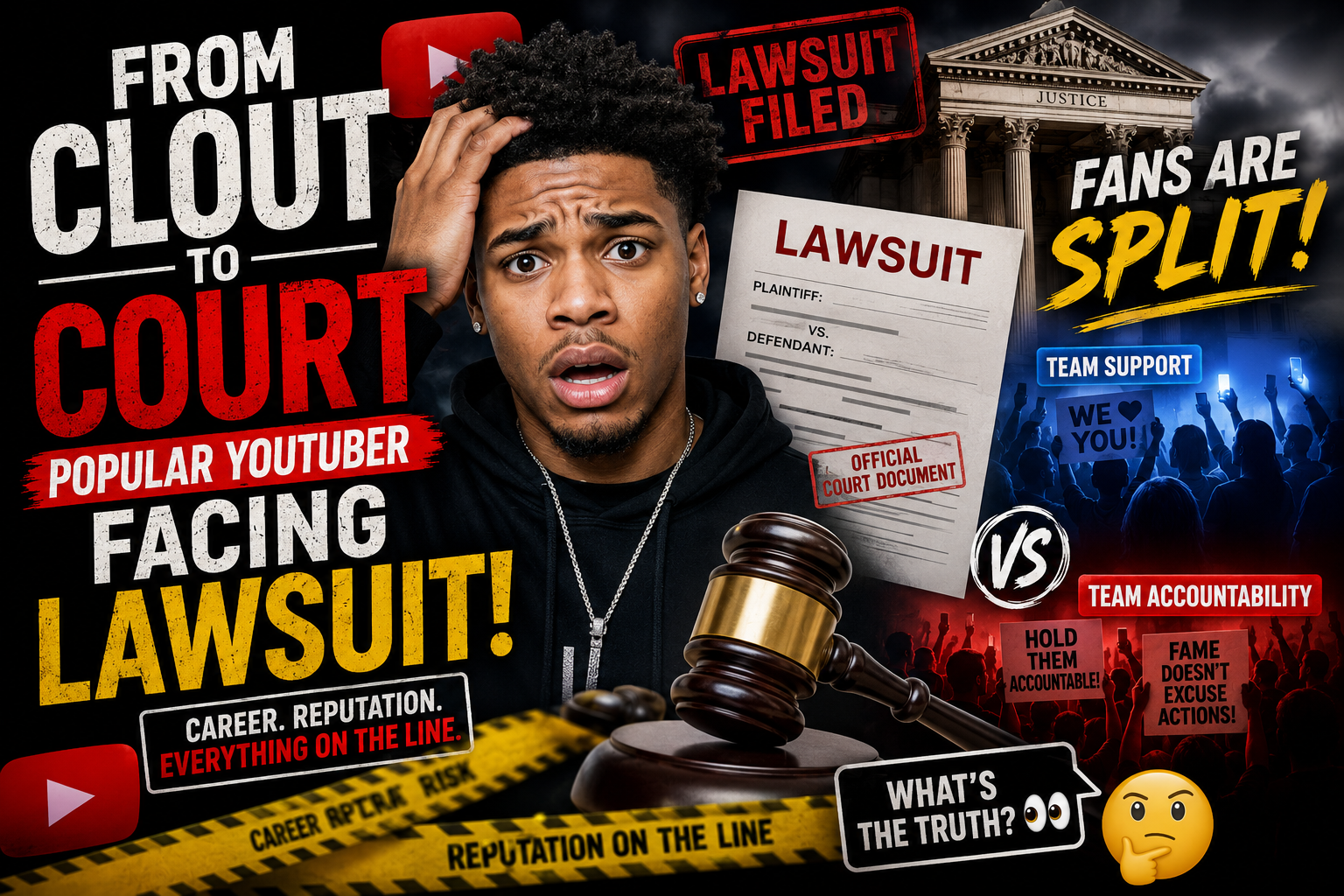
A popular YouTuber known for viral content and a strong online presence is now trending for a very different reason. Instead of views, collaborations, or new uploads, the conversation has shifted toward a lawsuit that has quickly captured attention across social media. What began as a routine rise in digital influence has turned into a serious discussion about accountability, business practices, and the realities behind online success.
The creator, who built their reputation through consistent content and audience engagement, had been enjoying steady growth. Their videos were gaining traction, brand partnerships appeared to be increasing, and their name was becoming more recognizable beyond their core audience. From the outside, everything suggested a creator moving in the right direction, building both influence and income.
However, that momentum took an unexpected turn when reports of legal action began circulating online. Initially, many people questioned whether the situation was real. Some assumed it was exaggerated, while others dismissed it as another example of internet rumors gaining traction without substance. But as more details began to surface, it became clear that the situation was more serious than first assumed.
The lawsuit reportedly involves disputes that go beyond simple misunderstandings. While full details are still emerging, discussions online point toward issues such as business disagreements, contract-related conflicts, and possible misconduct tied to professional dealings. These are not the types of issues that can be easily ignored or resolved through a simple statement, and that alone has changed how people are reacting.
Once the story reached a wider audience, social media platforms quickly became the center of discussion. TikTok creators began posting breakdowns, Twitter (X) threads started analyzing the situation, and YouTube commentary channels began offering their own interpretations. The phrase “from clout to court” began trending, capturing the dramatic shift in the creator’s narrative in just a few words.
What makes the situation particularly intense is the response from the fanbase. There is no clear consensus, and opinions appear to be sharply divided. On one side, supporters are urging patience. They argue that the full story has not yet been revealed and that people should avoid rushing to judgment. For them, the focus is on fairness and the idea that everyone deserves the opportunity to respond before conclusions are made.
On the other side, critics are emphasizing accountability. They believe that if the allegations have merit, then consequences should follow regardless of the creator’s popularity. This group is less concerned with waiting for additional details and more focused on the principle that influence should not protect anyone from responsibility.
This division highlights a recurring pattern in online culture. When a public figure faces controversy, audiences often split into opposing sides almost immediately. One group prioritizes loyalty and support, while the other focuses on scrutiny and accountability. The result is a conversation that becomes less about facts and more about perspective.
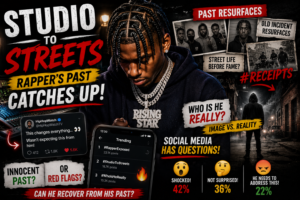
Adding to the complexity of the situation is the resurfacing of older content. As soon as the lawsuit became public, users began revisiting past videos, interviews, and collaborations. Moments that once seemed harmless are now being reinterpreted in light of the current situation. This kind of retrospective analysis is common during controversies, as audiences attempt to connect past behavior with present events.
Whether these older clips are relevant or being taken out of context is still part of the debate. However, their circulation has undoubtedly influenced public perception. When people see past content through a new lens, it can change how they interpret a creator’s actions and intentions.
Unlike typical online drama, the involvement of legal action introduces a different level of seriousness. Internet controversies often move quickly and fade just as fast, but legal matters operate on a different timeline. They involve formal processes, evidence, and outcomes that can have lasting consequences. This shift from online speculation to real-world implications is a key reason why the situation is receiving so much attention.
There are also significant business implications to consider. Being a YouTuber is not just about content creation; it is also about managing partnerships, contracts, and revenue streams. A lawsuit can disrupt all of these areas. Brands may become hesitant to collaborate, sponsors may reconsider their involvement, and ongoing projects could be affected.
Even before any final outcome is reached, the mere presence of controversy can create uncertainty. Companies often prioritize stability and reputation, and any risk, real or perceived, can influence their decisions. This means that the impact of the situation may extend beyond the legal case itself and into the creator’s overall career trajectory.
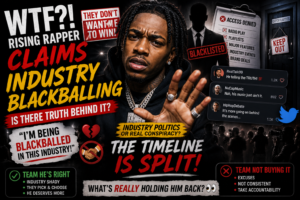
Another important aspect of this situation is the role of silence. At the time of discussion, there has been no strong public response addressing the allegations directly. This absence of communication has led to further speculation. Some interpret it as a strategic decision based on legal advice, while others see it as avoidance. In the digital space, silence rarely goes unnoticed, and it often becomes part of the narrative.
If a response does come, it will likely be closely analyzed. Audiences will expect clarity, accountability, or at least some form of explanation. The way the creator chooses to address the situation could significantly influence public perception moving forward.
Beyond the immediate controversy, this moment also reflects broader themes about the nature of online success. Social media platforms make it possible to build influence quickly, but they also create environments where every action can be documented and revisited. The same visibility that drives growth can also amplify challenges.
This dynamic creates a unique kind of pressure. Creators are not only expected to produce engaging content but also to manage their personal and professional lives in ways that can withstand public scrutiny. When issues arise, they do so in a space where millions of people can watch, comment, and form opinions in real time.
At the same time, there is a question about how much of the conversation is based on complete information. Social media often operates on fragments, short clips, partial statements, and secondhand interpretations. While these elements can generate engagement, they do not always provide a full understanding of the situation.
This raises an important point about how narratives are formed. The version of events that gains the most attention is not always the most accurate; it is often the most compelling. As a result, public opinion can shift quickly, sometimes before all the facts are available.
There is also an argument that attention, even when negative, can increase visibility. People who were previously unfamiliar with the YouTuber may now be searching for their content, trying to understand who they are and what led to the situation. In some cases, this can lead to increased traffic, even if it is driven by controversy.
However, increased visibility does not always translate into long-term success. The sustainability of a creator’s career depends on trust, consistency, and the ability to maintain positive relationships with both audiences and business partners. Controversy can challenge all of these factors at once.
Looking ahead, the outcome of the lawsuit will play a major role in determining what happens next. Legal decisions carry weight in ways that online opinions do not. Regardless of how the internet reacts, the final resolution will be based on evidence, arguments, and formal procedures.
In the meantime, the conversation continues. New opinions are being shared daily, and the situation remains active across multiple platforms. For many observers, this is not just about one creator but about what the situation represents.
It highlights the balance between influence and responsibility, the power of public perception, and the speed at which narratives can change. It also raises questions about fairness, accountability, and how much audiences should rely on incomplete information.
Ultimately, this moment serves as a reminder that digital success comes with real-world consequences. The line between online content and offline reality is thinner than it appears, and actions in one space can quickly impact the other.
💬 WHAT DO YOU THINK?
Is this a case of real accountability, or is the internet reacting too quickly without knowing the full story?
Should creators be judged immediately when situations like this arise, or should audiences wait for verified outcomes before forming opinions?
Drop your thoughts below.